
What Are the Minimum Requirements for a Sukkah?
Building a kosher sukkah doesn’t have to be complicated. Here’s everything you need to know about the minimum halachic requirements—and how to ensure your sukkah meets them.
Whether you’re building your first sukkah or looking to simplify your setup this year, understanding the minimum requirements for a kosher sukkah is essential. The good news? Jewish law outlines clear guidelines that are easier to follow than you might think. In this guide, we’ll break down the essential halachic requirements for a sukkah’s walls, roof, size, and placement—plus share tips for building one with confidence.
Why Do Sukkah Requirements Matter?
The sukkah is central to observing Sukkot, the seven-day festival commemorating both the fall harvest and the shelters G-d provided for the Israelites during their journey through the wilderness. To properly fulfill the mitzvot of dwelling in a sukkah—eating, spending time, and even sleeping in it—the structure must meet specific halachic standards outlined in the Talmud and later codified in the Shulchan Aruch.
A sukkah that doesn’t meet these requirements isn’t considered kosher, which means the mitzvot performed inside wouldn’t technically be fulfilled. But don’t worry: with some basic knowledge (and the right sukkah kit), building a kosher sukkah is straightforward.
Minimum Requirements for Sukkah Walls
The walls are what define the sukkah as an enclosed dwelling space. Here are the key halachic requirements:
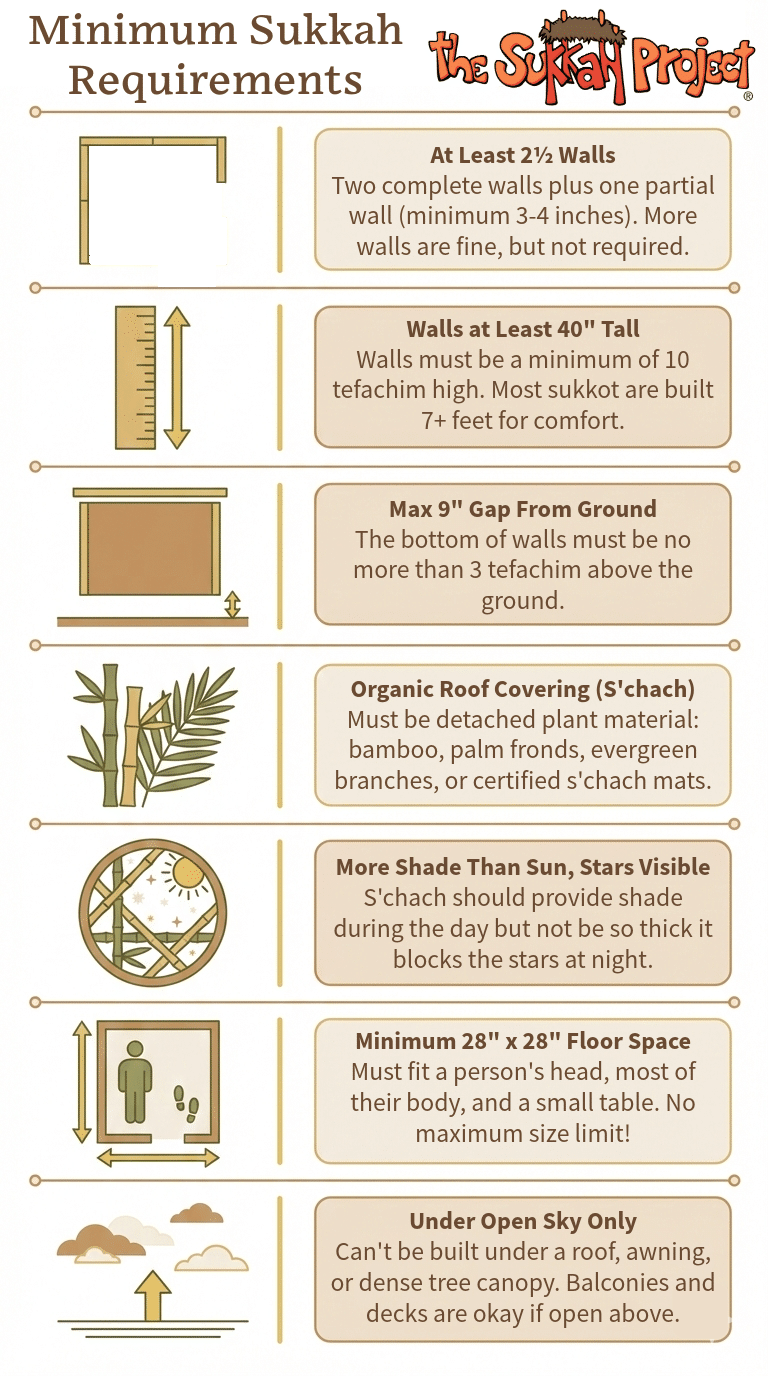
Number of walls: A sukkah must have a minimum of two complete walls plus a partial third wall. The partial wall must be at least one tefach (approximately 3-4 inches) wide. While two-and-a-half walls is the halachic minimum, most people build sukkot with three or four full walls for stability and comfort. Some even choose a unique six-sided sukkah design for extra interior space.
Wall height: The walls must be at least 10 tefachim (approximately 40 inches) tall. Most sukkot are built much taller—typically 7 feet or more—to allow for comfortable standing and movement inside.
Gap from the ground: The bottom of each wall should be no more than 3 tefachim (approximately 9 inches) above the ground. Larger gaps may render the walls halachically invalid.
Wall materials: The walls can be made from virtually any material—wood, metal, fabric, canvas, or even tarps. The key requirement is that the walls must be sturdy enough not to flap in normal winds. This is why our tubular sukkah kits and wood-frame sukkah kits use tautly secured SukkahScreen™ or canvas walls that resist flapping—eliminating the need for additional mehadrin straps that some other sukkah manufacturers require.

Minimum Requirements for S’chach (the Roof)
The s’chach is perhaps the most distinctive feature of a sukkah and has the most specific halachic requirements. The word s’chach comes from the Hebrew root meaning “to cover” or “to shade.”
What qualifies as kosher s’chach: The roof covering must be made from organic plant material that has been detached from the ground. Common examples include palm fronds, evergreen branches, bamboo, corn stalks, and reed grasses. The material cannot be susceptible to ritual impurity (tumah), which rules out any food items or materials that have been manufactured into vessels or utensils.
What doesn’t qualify: Manufactured or heavily processed materials generally cannot be used as s’chach, even if they’re organic in origin. However, kosher bamboo s’chach mats that are specifically manufactured according to rabbinical specifications for the purpose of sukkah covering are an approved exception. Our bamboo s’chach mats carry Star-K and Mehadrin (Badatz) certification, giving you confidence that your sukkah’s roof meets the strictest halachic standards.
Thickness and coverage: The s’chach should provide more shade than sunlight during the day (tzilasa meruba m’chamasah). At the same time, it shouldn’t be so dense that it completely blocks out the stars at night or prevents rain from entering. The ideal s’chach allows dappled sunlight through during the day while still providing comfortable shade.
What the s’chach rests on: According to many authorities, s’chach should not be directly supported by materials that are susceptible to tumah, such as metal. Our tubular sukkah kits solve this by including bamboo support poles that rest on top of the metal frame, providing a kosher surface for the s’chach. Our wood-frame kits use wooden beams for this purpose.
Minimum Size Requirements
A sukkah must be large enough for a person to fulfill the mitzvah of dwelling in it. The minimum dimensions are:
Floor space: At least 7 tefachim by 7 tefachim (approximately 28 inches by 28 inches)—enough to accommodate a person’s head, most of their body, and a small table. This is the absolute halachic minimum.
Maximum size: There is no maximum size limit for a sukkah! You can build one as large as you need, from a cozy family sukkah to BIG sukkah kits that seat hundreds of people for synagogue or school celebrations.
Height: The s’chach must be at least 10 tefachim (approximately 40 inches) above the floor but no more than 20 amot (approximately 30-35 feet) high. Most residential sukkot fall well within this range.
In practice, most families choose a sukkah large enough to comfortably seat their household around a table. Our most popular family-sized model, the 8’x12′ tubular sukkah kit, comfortably seats up to 10 people and provides ample room for meals and entertaining guests.
Location Requirements
Where you place your sukkah matters just as much as how you build it:
Open to the sky: The sukkah must be built under the open sky. You cannot build a sukkah under a permanent roof, overhang, awning, or dense tree canopy. If branches hang over your intended sukkah location, they must either be trimmed back or you’ll need to choose a different spot.
Temporary structure: The sukkah should be built as a temporary structure, not as a permanent addition to your home. This is inherent in the nature of Sukkot—we’re meant to leave our permanent dwellings and experience the temporary shelter that recalls G-d’s protection of our ancestors.
Proximity to home: While not a strict halachic requirement, tradition encourages building your sukkah as close to your home as practical. This makes it easier to eat meals in the sukkah and spend quality time there throughout the holiday.
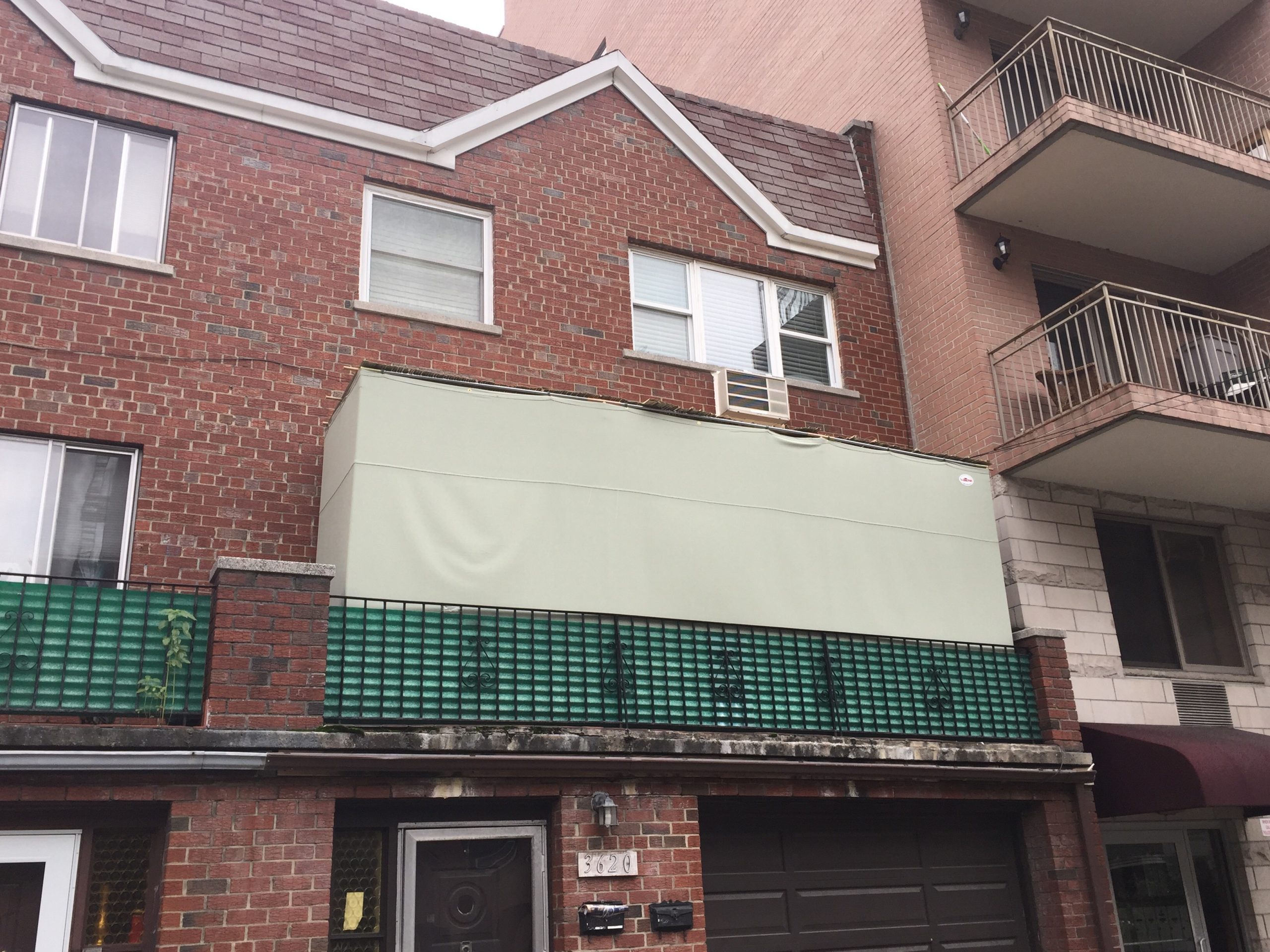
Balconies and decks: Yes, you can build a sukkah on a balcony or deck, as long as it’s open to the sky above. Many apartment dwellers in cities like New York and Chicago use custom sukkah kits to fit their unique spaces.
Common Questions About Sukkah Requirements
Generally no. Pop-up tents typically have fabric or nylon roofs that don’t qualify as kosher s’chach. The roof must be made of detached, unprocessed organic plant material or certified s’chach mats.
No. There can be a gap between the top of the walls and the s’chach, though many authorities recommend minimizing this gap. The halachic concept of lavud (“connected”) treats gaps of less than 3 tefachim as if they were solid.
If rain is heavy enough that it would ruin food on your table, you’re exempt from eating in the sukkah during that time. However, the sukkah itself remains kosher—you simply wait for the rain to stop.
Absolutely! Beautifying the sukkah (hiddur mitzvah) is actually considered meritorious. Traditional sukkah decorations include hanging fruits, handmade crafts, artwork, and beautiful banners. Adding LED sukkah lights creates a warm ambiance for evening meals.
The Easy Way to Meet All Sukkah Requirements
Understanding the minimum requirements is important, but you don’t have to figure out how to implement them on your own. At The Sukkah Project®, we’ve been helping families build kosher sukkot since 1996. Every sukkah kit we sell is designed to meet all halachic requirements out of the box.
Our klutz-proof kits include everything you need: sturdy frames with proper wall materials, bamboo support poles for kosher s’chach placement, and detailed instructions that make assembly straightforward even for first-time builders. Add our certified bamboo s’chach mats and you’ll have complete confidence that your sukkah is 100% kosher.
For more detailed information on the building process, check out our complete guide on how to build a sukkah.
Ready to Build Your Sukkah?
Now that you understand the minimum requirements for a kosher sukkah, you’re ready to create a beautiful space for celebrating Sukkot with your family and community. Whether you choose a simple wood-frame sukkah kit or our premium tool-free tubular sukkah kits, The Sukkah Project® is here to help you fulfill this meaningful mitzvah with ease.
Have questions about which sukkah is right for you? Contact us—we’re always happy to help!
Related Articles:
