
If you’ve priced sukkahs lately, two things probably stood out. The expensive ones run well past $1,000 for a small family sukkah. And ours are often the least expensive on the page—sometimes by a few hundred dollars—while we claim they’re also the best built. Both of those deserve an explanation, so here’s the truth. There’s no catch. We’re just not the kind of company you’re used to buying a sukkah from.
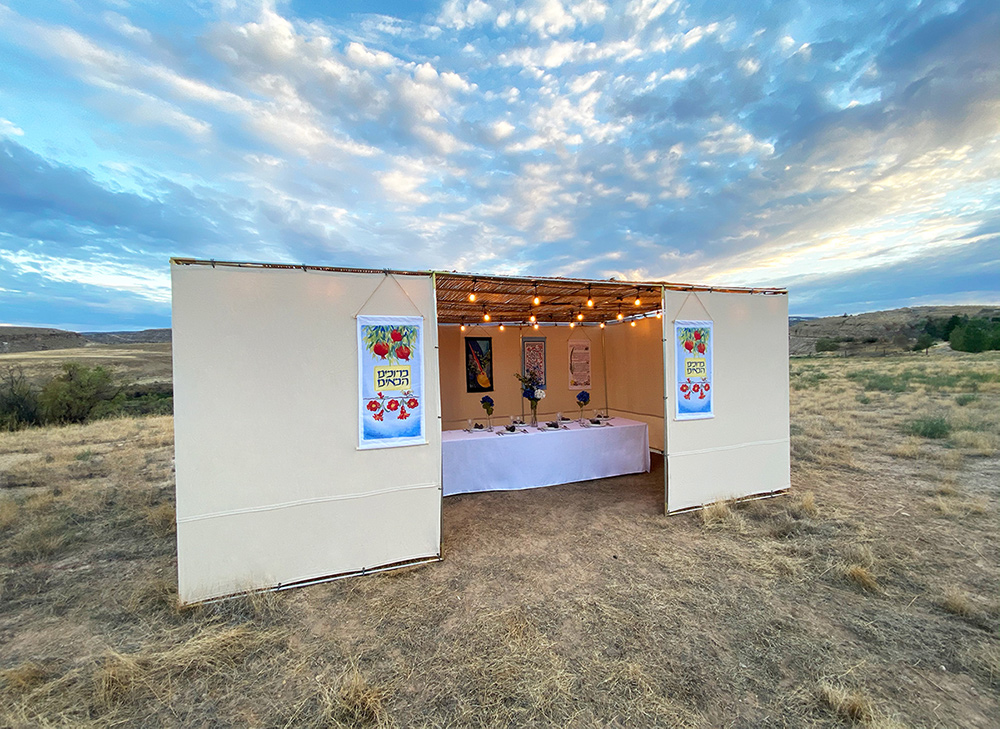
Scroll through the sukkah listings and you’ll notice most of them tend to look the same—two-tone panels, a big zippered window, sometimes tassels along the top, a price tag past $1,000. They photograph beautifully. What the photo doesn’t show is the fabric: thin printed nylon, the kind that looks sharp in year one and fades, sags, or tears by year two or three. And the frame itself: flimsy tubing, shoddy welds, a wobble you can feel.
A lot of those sukkahs aren’t even made by the companies selling them. They’re mass-produced overseas and imported by the container, and similar models turn up on wholesale sites for under $100 a unit. We can’t tell you what anyone’s margin is—but the flash you’re paying for is cheap to print, and the markup is not.
We design our own sukkahs and assemble every kit by hand in Grand Junction, Colorado. No importer, no middleman, no rebranding someone else’s tent. Our walls are heavy-duty SukkahScreen or canvas—real material chosen to survive real weather, not to pop in a product photo. The frame is high-strength galvanized steel and goes together without tools. And it lasts: most of our customers are still using the same sukkah 15 years later.
We’ve been doing this since 1996—this is our 30th year.

Worth saying plainly: our 8×12 sukkah costs less than most of those companies charge for a 6×8. A bigger sukkah, built to last, for less money.
Fair question—and it’s the whole point of this page. A lower price usually means a worse product. With us it doesn’t, for a few specific reasons:
We don’t pay a reseller. We design it, we hand-assemble every kit, we sell it to you directly. The money goes into the sukkah instead of a supply chain.
We spend on the structure, not the flash. The expensive “extras” on other sukkahs—the printed panels, the cosmetic trim—are cheap to make and inflate the price more than the quality. We’d rather put the cost into fabric and frame you’ll still be using in 2040 (or 5801 on our calendar...).
Our overhead is lower. We’re owner-operated, based in Grand Junction, CO instead of a high-cost metro, running a lean shop. That shows up in the price instead of disappearing into it.
We’ve had 30 years to get it right. Decades of refining the design and our supplier relationships mean we build a better sukkah for less than a newcomer can.
And honestly—we’d rather more people have a good sukkah than squeeze every last dollar out of the ones who buy one. That’s always been our purpose.
A lot of the pricier sukkahs—the flashy ones with printed panels and big windows—are mass-produced overseas, imported in bulk, and marked up heavily. The same models turn up on wholesale sites for under $100 a unit. You’re often paying for cosmetic flash and a big markup, not better materials. A well-built sukkah doesn’t have to cost four figures.
It depends what “cheap” means. A thin nylon sukkah that fades or tears after a season isn’t a bargain at any price. But low cost and high quality aren’t mutually exclusive—if a company designs and builds its own sukkahs and skips the importer markup, like we do, you can get a durable one for less. Look at the materials and the lifespan, not just the sticker.
Because we design and assemble them ourselves in Grand Junction, Colorado, and sell direct—no importer, no reseller, no middleman markup. We put the money into the frame and fabric instead of cosmetic trim, run a lean shop, and have had since 1996 to get the design right. The savings go to you instead of a supply chain.
A good one should last well over a decade. Ours are built to last 15+ years—most of our customers are still using the same sukkah they bought from us years ago. Thin imported nylon often needs replacing after a season or two, which makes the “cheaper” option the more expensive one over time.
Many are. A large share of the sukkahs sold in North America—especially the ones with bright multi-tone panels—are manufactured overseas and rebranded by the seller. Ours aren’t: we design them in-house and assemble every kit here in Colorado.
It’s just a good sukkah, priced like the people who built it actually want you to have it.
Shop sukkahs →Questions? Call us—a real, friendly person picks up. 844-4-SUKKOT (844-478-5568)

